Risk Control
Prevents overweighting in volatile sectors. By selling high-performing assets, you lock in gains and return to your original risk profile.
Prevents overweighting in volatile sectors. By selling high-performing assets, you lock in gains and return to your original risk profile.
Forces the purchase of undervalued assets that have drifted below their target weight, ensuring a disciplined "mean reversion" strategy.
Rebalancing relies on math, not intuition. It removes the temptation to "chase winners" during market peaks or panic during dips.
Establishing Asset Allocation Targets is the foundational step in professional wealth management. This process involves defining the specific percentage of your total Net Worth that should be held in various asset classes, such as equities, fixed income, real estate, and cash equivalents. Without these targets, a portfolio is merely a collection of random investments rather than a structured financial vehicle.
Our methodology utilizes a "Top-Down" approach. We first determine the macro-allocation between growth and defensive assets based on liquidity requirements and time horizons. For instance, a standard growth-oriented portfolio might target 70% equities and 30% fixed income. Within those buckets, we further refine targets into sub-classes like Large-Cap Domestic, Emerging Markets, and Government Bonds.
"Statistical data suggests that over 90% of a portfolio's long-term return variability is driven by asset allocation rather than individual security selection or market timing."
Portfolio drift occurs when the market performance of different assets causes their relative weights to deviate from the original targets. For example, if your target for Technology stocks is 15%, but a bull market pushes that weight to 22%, your portfolio is now "drifting" into a higher risk profile than intended.
We employ a 5/25 Rule for monitoring. Rebalancing is triggered if an asset class drifts by more than 5% in absolute terms (e.g., 20% target goes to 25%) or by 25% in relative terms (e.g., a 4% target goes to 5%). This dual-threshold system ensures that both large and small allocations are managed with equal precision.
| Asset Class | Target % | Drift Limit |
|---|---|---|
| US Equities | 40% | +/- 5% |
| Intl Equities | 20% | +/- 4% |
| Fixed Income | 30% | +/- 3% |
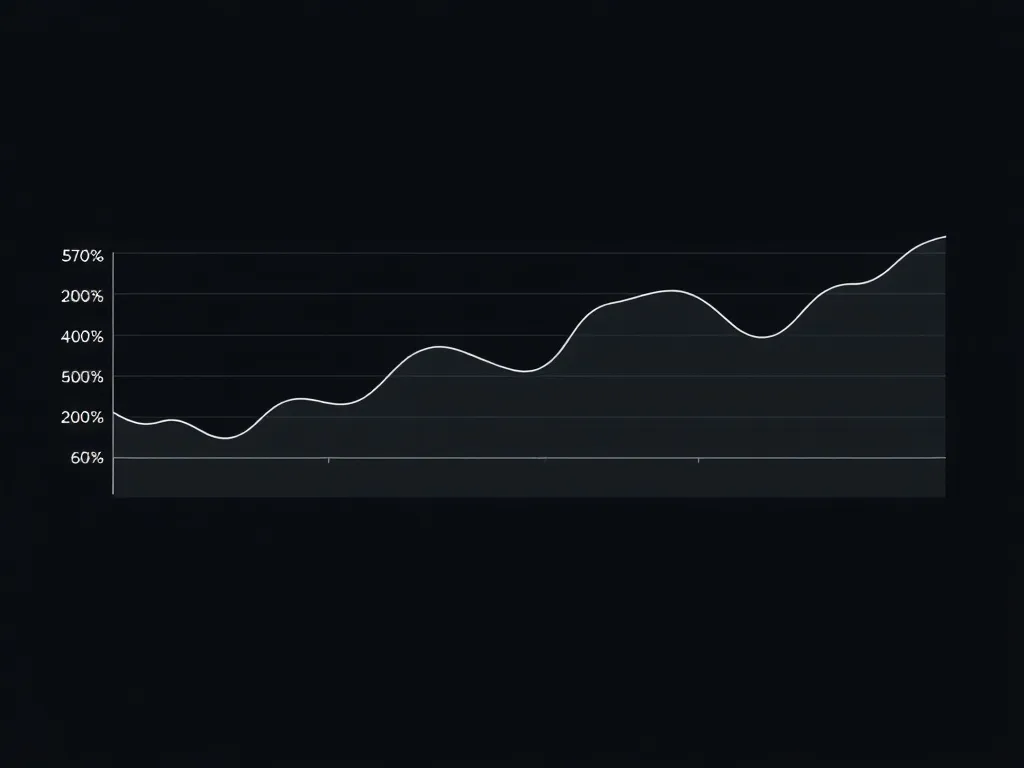
Continuous monitoring is superior to calendar-based rebalancing (e.g., once a year). By monitoring drift daily or weekly, investors can capture market volatility to their advantage, selling assets that have become overextended during short-term rallies. This is a core component of Asset Classification management.
Verify current Net Worth Benchmarks to ensure total liquidity is sufficient for transaction costs.
Assess tax implications. Prioritize rebalancing within tax-advantaged accounts (401k/IRA) to avoid capital gains taxes.
Check for wash-sale rule violations if selling at a loss in taxable accounts.
Execute sell orders first to generate the necessary cash for underweight purchases.
Use limit orders for all trades to prevent slippage in low-liquidity market environments.
Document the rationale for the rebalance and the specific drift percentage that triggered the action.
Subscribe to be the first to know.
For most individual investors, a quarterly review is sufficient. However, during periods of high market volatility (standard deviation > 2%), monthly checks are recommended to ensure the risk profile hasn't shifted significantly. High-frequency checking often leads to over-trading and unnecessary tax events.
Yes, this is the most efficient method. Instead of selling overweighted assets (which may trigger taxes), simply direct new savings or dividends toward the underweighted asset classes. This "cash-flow rebalancing" gradually brings the portfolio back to target without incurring transaction costs or tax liabilities.
The hardest part of rebalancing is selling your "winners." However, extreme performance usually leads to extreme valuations. Rebalancing ensures you are taking profits at peak levels and moving that capital into assets with better forward-looking value. Discipline beats momentum over long cycles.
Review our Case Studies to see how systematic rebalancing protected capital during market downturns.
Start Tracking Now